
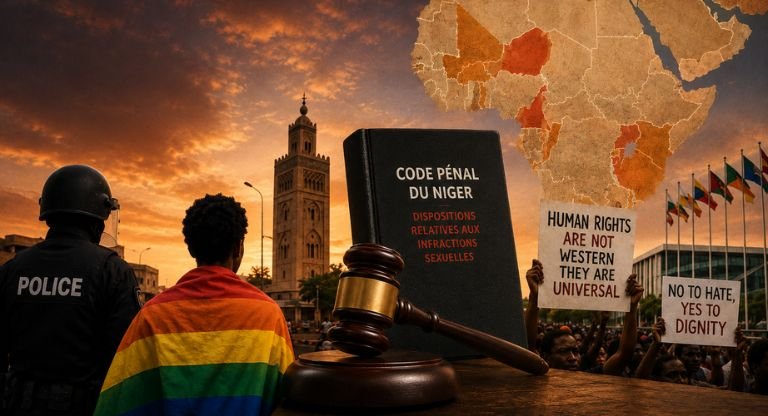
In our June round-up of LGBTQ+ news, Fatteh also spotlights Ghana’s homophobic ‘family values’ conference, claims of a ‘gay paradise’ in Cape Verde and must-read stories from Gabon, South Africa and Nigeria.
by Beza Lealem
Weeks after Niger’s new penal code came into force, its consequences are already ebing felt. At least 16 people have been arrested under provisions that that criminalise same-sex relations for the first time in the country’s history, while activists describe a growing climate of fear that has driven many LGBTQ people into hiding in the capital Niamey. For years, Niger stood apart from several of its neighbours, as consensual same-sex relations had not previously been explicitly outlawed.
That changed when the military government enacted a law in June, introducing prison sentences of up to 10 years for same-sex relations and up to 20 years for activities linked to LGBTQ organisations and same-sex marriages. The speed of the arrests that followed underscores long-standing warnings from human rights organisations that criminalisation rarely remains symbolic. Once a country creates new offences, they become tools not only of policing but also of exclusion, intimidation and hostility.
Community organisations and health workers have warned that fear of prosecution is discouraging people in Niger from seeking HIV prevention services, accessing peer support, or maintaining contact with groups that have long provided safe spaces. Vulnerable individuals are increasingly reluctant to seek help, while advocates face difficult decisions about whether to continue their work publicly. Niger’s experience illustrates a broader shift across parts of Africa, where new legislation increasingly targets not only same-sex intimacy but also the networks, organisations and services that allow LGBTQ communities to exist.
The regional push for anti-LGBTQ policies continued to gain momentum in June. At the fourth African Inter-Parliamentary Conference on Family Values and Sovereignty (AICFVS), representatives from about 20 countries convened in Accra, Ghana, to endorse a regressive charter urging governments to strengthen legislation based on so-called “African family values” and withdraw from international treaties and agreements, including those with the United Nations, seen as promoting “the LGBT agenda”.
South Africa and Mozambique abstained from the final decision, while 18 delegations supported advancing the charter, which had been drafted at a previous conference in Uganda. Although the document is not legally binding, it reflects an increasingly coordinated effort to legislate against LGBTQ people across the continent, with Burkina Faso and Eswatini now expected to host future editions of the conference in 2027.
Ethiopia was not among the countries known to have representatives at this year’s conference. However, Ethiopian anti-LGBTQ campaigners have played visible roles in past gatherings. Among them is Seyoum Antonios, a close affiliate of hard-right religious groups in America and the Africa director of the fundamentalist Christian organisation Family Watch International, who has previously described homosexuality as the “pinnacle of immorality” and declared that Ethiopia shall be “the graveyard for homosexuality“.
Yet June also offered reminders that this downward trajectory for LGBTQ rights is neither uniform nor uncontested. In South Africa, new research found growing public acceptance, with 60 percent now saying that gay and lesbian people deserve the same rights as other citizens. Meanwhile, a wave of coverage highlighting Cape Verde’s comparatively progressive laws, high levels of social acceptance and growing visibility drew renewed attention to another of the continent’s relative bright spots — even if calling the island nation an “LGBTQ paradise,” as some headlines have done, goes too far.
Fatteh’s Defender of the Month
Each month, Fatteh celebrates the people who stand up for LGBTQ communities across Africa. Our latest honouree is an activist whose years of advocacy have helped push for greater recognition and protection of sexual and gender minorities in Eswatini.
Sisanda Mavimbela is Fatteh’s Defender of the Month for her ongoing work advancing the rights and visibility of LGBTQ people in a country where same-sex intimacy between men remains criminalised, discrimination is widespread, and activists face major obstacles. As co-director of programmes and advocacy for Eswatini Sexual and Gender Minorities (ESGM), and formerly the group’s executive director, Mavimbela has spent years working as a human rights defender.
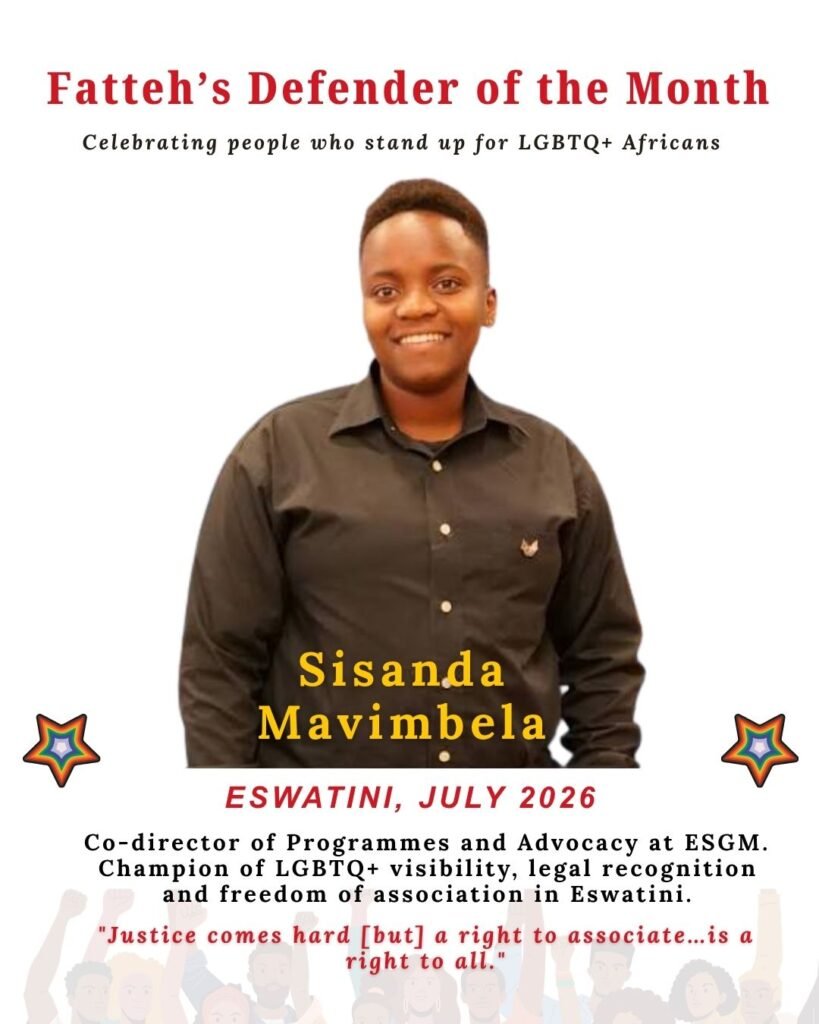
She has been closely involved in ESGM’s struggle for legal recognition, including an appeal three years ago which resulted in a bittersweet victory in the country’s highest court. After the government ignored the ruling requiring it to allow the registration of an LGBTQ rights organisation, Mavimbela remained stoic. “Justice comes hard,” she said, “and sometimes is not reached at all,” before insisting she would not give up because “a right to associate…is a right to all Swazis as per the constitution.”
Mavimbela’s fight has come to symbolise the challenges many LGBTQ organisations face across Africa. In a country where activists have continued their work despite legal limbo and repression, her persistence reflects the determination of community leaders who demand something fundamental: the freedom to organise openly and participate fully in public life.
Explore our complete round-up of June headlines.

 Niger arrests begin under sweeping anti-LGBTQ criminal code
 Gabon lawmakers consider restoring criminal penalties for homosexuality
 Ghana conference advances continent-wide anti-LGBTQ charter
 Nigeria’s Afrobeats music scene wrestles with its uneasy relationship with queerness
 South Africa and Mozambique abstain from supporting anti-LGBTQ charter
 Burkina Faso and Eswatini selected to host future anti-LGBTQ conferences
 Oxfam Africa retracts guidance discouraging staff from using LGBTQ language
 Uganda’s restrictions on foreign-funded organisations opposed by LGBTQ groups
Nigeria’s anti-gay ‘kito’ attacks intensify amid declining HIV support
South African study finds growing acceptance of LGBTQ people
 Cape Verde highlighted as a regional example of LGBTQ progress
 Cameroon LGBTQ defender forced from home following mob threats