
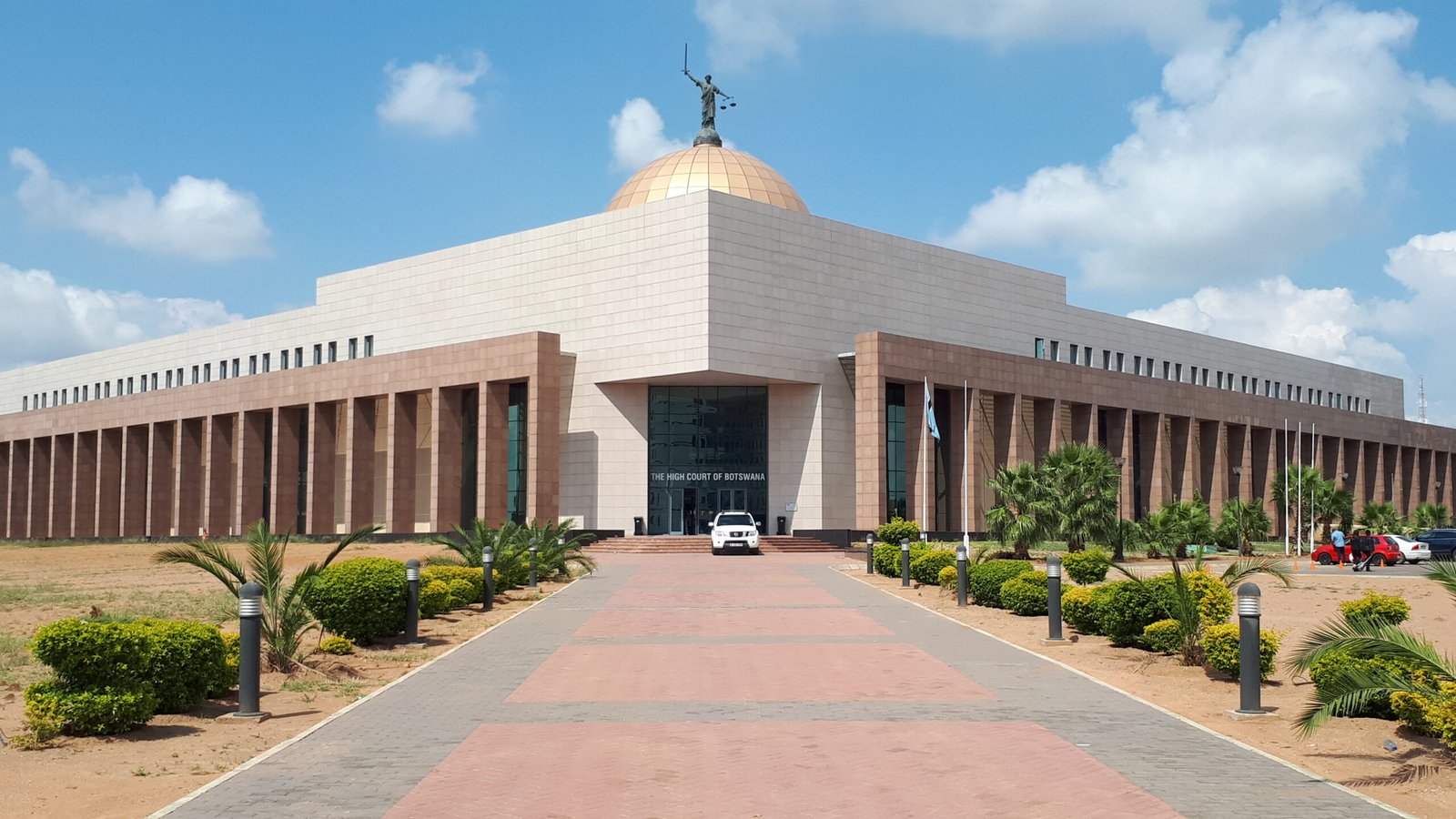
Botswana’s High Court in Gaborone, where two women are challenging the country’s exclusion of same-sex couples from civil marriage. Image: Wikimedia Commons.
In our July round-up of LGBTQ+ news, Fatteh also spotlights a legal reprieve for two Ugandan women, musicians challenging prejudice in Ghana and Zimbabwe, and must-read stories from Gabon, South Africa, Egypt and Mozambique.
by Beza Lealem
From courtrooms to cultural spaces, LGBTQ Africans pressed for change last month, backed by allies increasingly willing to speak out against prejudice.
A landmark challenge brought by Bonolo Selelo and Tsholofelo Kumile moved forward in Botswana’s High Court in July. The couple are seeking the same legal recognition and protections available to heterosexual married couples. The women turned to the courts after the Department of Civil and National Registration refused to process their notice of intention to marry. They argue that excluding same-sex couples from civil marriage violates their constitutional rights to dignity, liberty and equality.
The July hearings did not decide whether the couple can marry. Instead, the court considered applications from religious and traditional organisations seeking to join the proceedings in opposition to marriage equality. A ruling on those applications is expected in September, before the substantive case is heard in late October. The government maintains that the Marriage Act recognises marriage only between a “bride” and a “bridegroom”, while the couple argue that those terms cannot lawfully be used to deny them equal protection.
The case tests how far Botswana’s recent legal progress will extend. In 2019, the High Court struck down colonial-era provisions criminalising consensual same-sex intimacy, and the Court of Appeal upheld that decision in 2021. The courts have also upheld the right of advocacy group LEGABIBO (Lesbians, Gays and Bisexuals of Botswana) to be legally registered. Yet Botswana still offers no legal recognition to same-sex couples. If Selelo and Kumile succeed, Botswana would join South Africa, where same-sex marriage has been legal since 2006, as one of only two African countries to provide marriage equality.
The push for greater acceptance is also playing out beyond the courts, with prominent African cultural figures using their platforms to challenge prejudice. In Ghana, musician and long-time LGBTQ ally Sister Deborah used a July radio interview to challenge the claim that homosexuality is foreign to Africa. She rejected the idea that exposure to LGBTQ issues can change someone’s sexual orientation and urged listeners to see sexual and gender minorities as whole human beings entitled to dignity and respect.
Sister Deborah’s intervention was significant in a country where speaking publicly in support of LGBTQ people can carry professional and personal risks, especially since parliament passed a sweeping anti-LGBTQ bill in May. Her stance drew international support, with British singer Boy George publicly thanking her for standing with LGBTQ communities in Ghana and across Africa.
Musicians have also been confronting prejudice through their art. In Zimbabwe, friends and collaborators of openly gay musician Tafadzwa Charles Jaera, known as Charles TJ, hope to posthumously release his debut album, Unmuted, following his death in February at the age of 28. The album, which he completed before his death, explores identity, rejection, faith and mental health, while songs such as “Ndinorarama Zvinofadza Ini” (“I Live My Life the Way That Pleases Me”) asserted his right to live authentically. His music has continued to reach new audiences since his passing.
Fatteh’s Defender of the Month
Each month, Fatteh celebrates the people who stand up for LGBTQ communities across Africa. Our latest honouree is a Ugandan faith leader whose death marks the loss of one of their most steadfast allies.
For more than twenty years, Bishop Christopher Senyonjo stood with LGBTQ Ugandans when few senior religious leaders were willing to do so. The retired Anglican Bishop of West Buganda, who died in Kampala on 19 July at the age of 94, offered pastoral counselling to people rejected because of their sexual orientation and became an outspoken defender of their dignity and human rights.
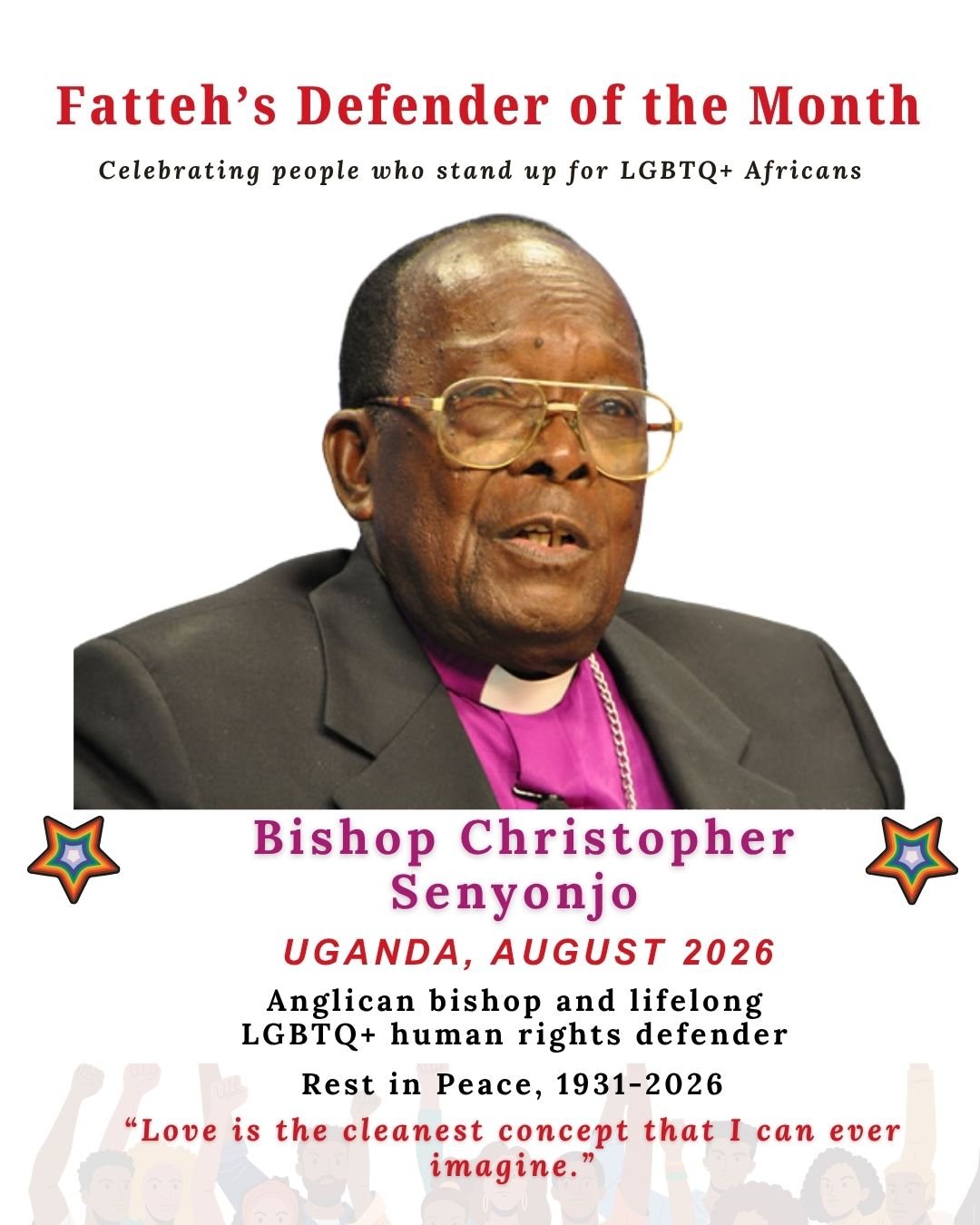
Senyonjo’s advocacy grew from encounters with LGBTQ young people following his retirement as bishop in 1998. He opposed Uganda’s anti-homosexuality legislation, testified against it, supported grieving families and founded the St Paul’s Reconciliation and Equality Centre in Kampala. His advocacy brought him into conflict with the Church of Uganda, which stripped him of his clerical entitlements in 2006, but he continued to argue that faith should welcome rather than condemn those pushed to the margins.
His work received international recognition, including the Clinton Global Citizen Award in 2012 and an honorary Doctor of Laws from the University of Leeds in 2018. In Uganda, where the 2023 Anti-Homosexuality Act remains in force, Senyonjo’s steadfast support for LGBTQ people challenged the idea that religion must be a source of exclusion. His legacy is the example of a faith leader who chose compassion, conscience and acceptance even when doing so placed him at odds with his own institution.
Explore our complete round-up of July headlines.

 Religious groups seek oppositional role in Botswana same-sex marriage case
 Charles TJ’s music lives on after the Zimbabwean artist’s death
 Sister Deborah challenges anti-LGBTQ myths on Ghanaian radio
 Ugandan LGBTQ communities celebrate Pride without public marches
 Irish tribunal rejects Malawian asylum seeker’s claim to be gay
 Egypt bars LGBTQ cruise after Turkey refuses entry
 Cape Town chosen as a location for international anti-LGBTQ summit
Uganda ends case against women arrested over alleged kiss
LGBTQ community mourns longstanding Ugandan ally Bishop Senyonjo
 Senegal court halts constitutional reform containing same-sex marriage ban
Rights body warns Ghana’s anti-LGBTQ bill threatens fundamental freedoms
 Nigeria’s Kogi University expels students over alleged same-sex activity
 Gabon proposal raises fears of renewed criminalisation of homosexuality
 Mozambique faces renewed calls to register LGBTQ groups
South Africa urged to protect LGBTQ HIV services amid funding crisis